
Exosome Therapy: What This Breakthrough Means for Regenerative Medicine
Audio Overview
Exosome Therapy: What This Breakthrough Means for Regenerative Medicine
🎧 Audio Overview
summary, or read the transcript below:
View Audio Transcript
What if we could harness the body’s own messaging system to heal damaged tissues and regenerate organs? That’s exactly what exosome therapy is doing—and it’s moving from research labs into real clinical applications.
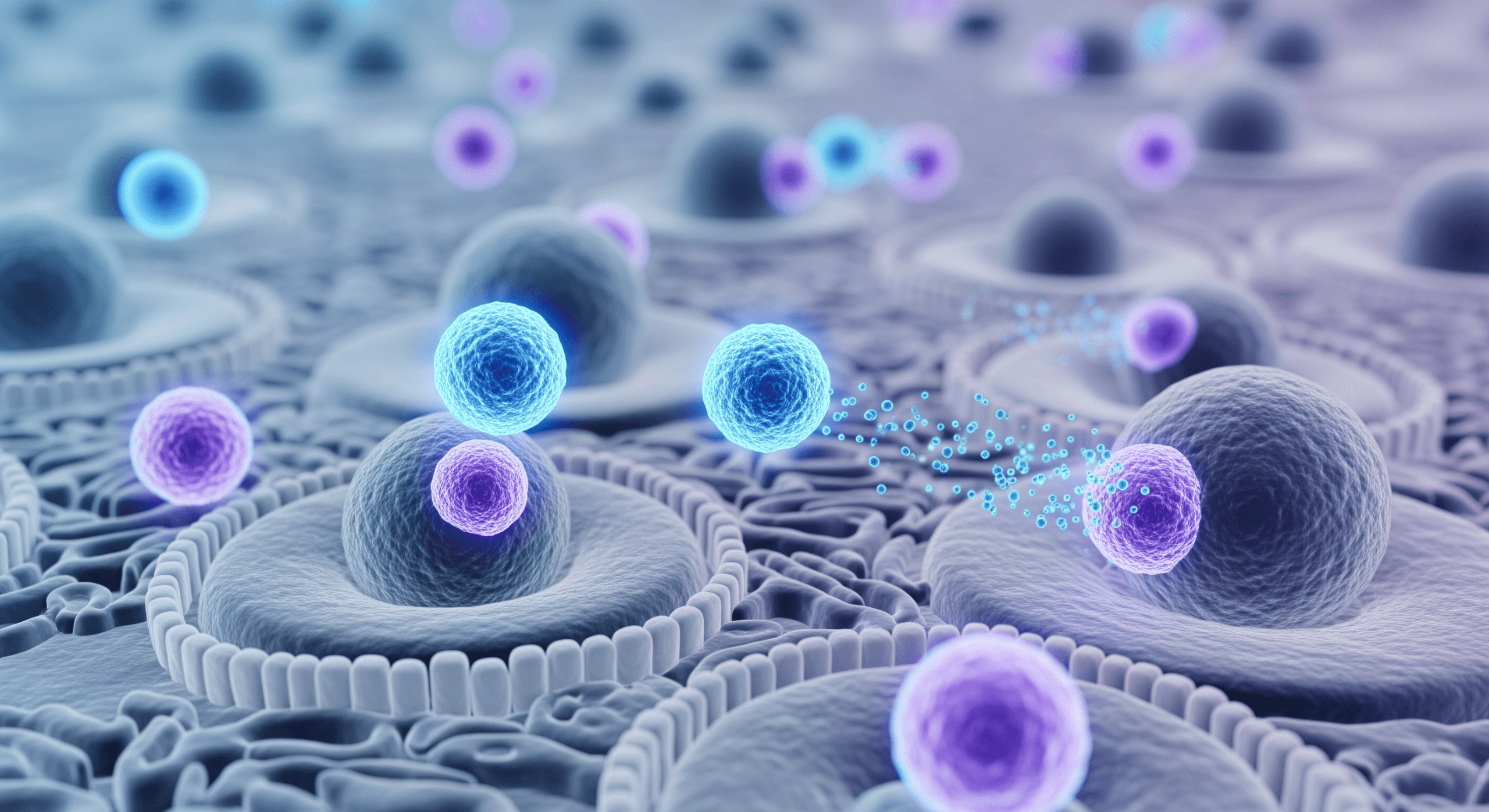
Exosomes are tiny packages, about 30 to 150 nanometers, that cells release to communicate with each other. They carry proteins, genetic material, and growth factors—essentially molecular instructions that can tell other cells how to behave.
What makes this exciting for medicine? Exosomes can cross barriers that most treatments can’t, including the blood-brain barrier. They’re being tested right now in 31 clinical trials for everything from heart damage to neurological conditions to wound healing.
Unlike stem cell therapy, exosomes don’t carry the risks of live cells—no concerns about unwanted growth or immune rejection. They’re easier to store, safer to use, and in many cases, just as effective.
We’re still working out optimal dosing and standardization, but the science is solid. If you’re interested in regenerative medicine options, exosome therapy is definitely worth understanding. It’s not science fiction—it’s happening now.

Imagine if we could harness the body’s own communication system to heal damaged tissues, regenerate organs, and treat conditions that have long resisted conventional therapy. That’s the promise of exosome therapy, and it’s moving from laboratory research into clinical reality faster than most people realize.
Exosomes are nanosized packages—roughly 30 to 150 nanometers in diameter—that cells release to communicate with each other. Think of them as molecular messengers carrying instructions in the form of proteins, nucleic acids, and growth factors. They’re wrapped in a protective lipid layer that allows them to travel through the body and deliver their cargo precisely where it’s needed.
What makes exosomes particularly interesting for medicine is their ability to cross biological barriers that typically block treatments, including the blood-brain barrier. This opens up therapeutic possibilities that were simply impossible with traditional approaches.
Why Exosomes Are Different
For years, stem cell therapy has shown promise in regenerative medicine. But live cell therapies come with significant challenges: storage difficulties, immune rejection risks, and concerns about uncontrolled cell growth. Exosomes derived from mesenchymal stem cells (MSCs-EXOs) offer a compelling alternative.
The advantages are substantial. MSCs-EXOs demonstrate therapeutic effects comparable to—or in some cases superior to—the stem cells themselves. But they come without the safety concerns of live cells. There’s no risk of unwanted differentiation or tumor formation. Storage and handling are dramatically simpler. And because exosomes are cell-free, they trigger minimal immune response.
As of 2025, at least 31 clinical trials are actively exploring MSCs-EXOs as alternatives to traditional cell therapy. That’s not speculation or hype—it’s real clinical investigation happening right now.
Current Clinical Applications
The therapeutic potential of exosomes spans multiple organ systems. In cardiovascular medicine, researchers are investigating exosomes for cardiac repair following heart attacks. Early results suggest these tiny vesicles can promote healing and reduce scarring in damaged heart tissue.
Neurological applications may be even more promising. Exosomes can cross the blood-brain barrier—something most medications cannot do—which makes them candidates for treating stroke, spinal cord injuries, and neurodegenerative conditions. Research is exploring their use in Parkinson’s disease, Alzheimer’s disease, and other conditions where current treatments are limited.
For patients with diabetic ulcers, exosome therapy has accelerated wound healing in clinical studies. The mechanism appears to involve enhanced cell migration, improved blood vessel formation, and reduced inflammation—all critical factors in wound repair.
In orthopedics, recent research shows exosome injections can reduce pain, enhance mobility, and even regenerate damaged cartilage. Patients report minimal downtime compared to surgical interventions. While we’re still early in understanding optimal dosing and treatment protocols, the initial results are encouraging.
The Science Behind the Therapy
Understanding how exosomes work helps explain why they’re generating so much research interest. When a cell releases exosomes, it’s essentially packaging up specific molecular instructions. These packages then travel through bodily fluids until they encounter target cells.
Upon contact, exosomes can transfer their contents—proteins, microRNAs, messenger RNAs, and other molecules—directly into recipient cells. This transfer can modify how the receiving cell behaves: reducing inflammation, promoting growth, enhancing repair mechanisms, or modulating immune responses.
The specificity of this system is remarkable. Exosomes from different cell types carry different cargo and have different effects. This means we can potentially tailor exosome therapy to specific conditions by choosing the right source cells and optimizing the cargo they contain.
Beyond Treatment: Diagnostic Potential
While much attention focuses on exosomes as therapy, they’re also emerging as powerful diagnostic tools. Because exosomes circulate in blood, urine, saliva, and other bodily fluids, they can be collected non-invasively. And because they carry molecular signatures from their cells of origin, they can reveal disease processes happening deep in the body.
Researchers are developing exosome-based tests for early cancer detection, cardiovascular disease monitoring, and neurodegenerative disease diagnosis. The ability to detect molecular changes before symptoms appear could transform how we approach disease prevention and early intervention.
Current Challenges
Despite the promise, significant hurdles remain before exosome therapy becomes widely available. The biggest challenge is standardization. Current methods for isolating exosomes—ultracentrifugation, ultrafiltration, size exclusion chromatography—vary considerably in their results. Batch-to-batch variability makes consistent dosing difficult.
Scaling up production from research quantities to clinical quantities presents substantial technical challenges. We need reliable, reproducible methods that can generate therapeutic-grade exosomes in the volumes required for widespread clinical use.
Regulatory pathways are still being established. Should exosomes be classified as biologics? Cell therapies? Something entirely new? These questions need answers before widespread clinical adoption can occur.
What This Means for Patients
If you’re reading about exosome therapy and wondering whether it’s right for you, here’s what you should know: we’re in an exciting transitional phase. The science is solid. Clinical trials are ongoing. But most applications are still investigational.
Some clinics are already offering exosome treatments, particularly for orthopedic and aesthetic applications. If you’re considering such treatment, ask detailed questions: What is the source of the exosomes? How are they isolated and purified? What evidence supports their use for your specific condition? What are the costs and potential risks?
For conditions with limited current treatment options—certain neurological disorders, advanced heart failure, severe tissue damage—clinical trials may offer access to exosome therapy. Discussing trial participation with your physician is worth considering if conventional treatments haven’t provided adequate results.
Looking Ahead
The trajectory of exosome research suggests we’re witnessing the early stages of a significant shift in regenerative medicine. As isolation techniques improve, as we better understand optimal dosing and delivery, and as regulatory frameworks develop, exosome therapy will likely become more accessible.
We may see exosomes used not just as standalone treatments but as delivery vehicles for other therapeutics—essentially hijacking the body’s natural communication system to deliver drugs, gene therapies, or other interventions with unprecedented precision.
The convergence of exosome biology with advances in biotechnology, artificial intelligence for treatment optimization, and precision medicine approaches creates possibilities that seemed like science fiction not long ago. Cell-free regenerative therapy that’s targeted, effective, and safe—that’s the goal, and we’re getting closer.
Dr. Pradeep Albert is a regenerative medicine physician, musculoskeletal radiologist, and author of “Exosomes, PRP, and Stem Cells in Musculoskeletal Medicine” and “Lifespan Decoded: How to Hack Your Biology for a Longer, Healthier Life.” He specializes in regenerative therapies, longevity science, and AI applications in healthcare.
For now, exosome therapy represents one of the most promising frontiers in regenerative medicine. It’s worth watching closely, worth understanding, and for some patients, worth discussing with their healthcare providers as a potential option when traditional approaches fall short.


