

The Impact of Women Farmers on Global Health and Climate Resilience: A Comprehensive Analysis
Introduction
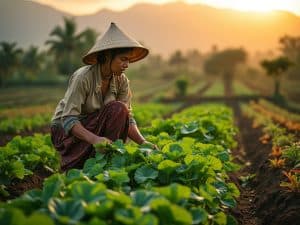
The intricate relationship between women in agriculture, global health outcomes, and climate change represents one of the most significant yet underexplored areas of public health and environmental science. Women farmers, who currently produce approximately 43% of the world’s food supply, stand at the intersection of food security, population health, and environmental sustainability. Their agricultural practices, particularly in small-holder farming operations of five acres or less, demonstrate remarkable efficiency in resource utilization while maintaining crucial biodiversity preservation standards that industrial agriculture often struggles to achieve.
The impact of women farmers extends far beyond mere agricultural production metrics, directly influencing maternal and child health outcomes across generations. Research consistently demonstrates that when women have access to agricultural resources and education, they not only improve crop yields but also make more informed decisions about family nutrition, healthcare utilization, and environmental stewardship. These decisions create a cascade effect, improving community health indicators while simultaneously promoting sustainable farming practices that help mitigate climate change impacts. However, significant gender-based disparities in access to agricultural resources, technical training, and financial services continue to limit the full potential of women’s contributions to global food security and health outcomes.
The convergence of women’s agricultural practices with global health and climate change presents both unprecedented challenges and opportunities. As climate change threatens traditional farming methods and food security, women farmers often serve as knowledge holders of resilient agricultural practices that can adapt to changing environmental conditions. Their approaches to farming frequently incorporate traditional ecological knowledge with modern sustainable practices, creating innovative solutions for food production that protect both human health and environmental integrity. These interconnected aspects of women’s agricultural leadership demonstrate the critical need for a comprehensive understanding of their role in shaping future global health and environmental outcomes.
Core Concepts
Women farmers employ distinctive agricultural practices that fundamentally differ from industrial farming approaches, particularly in their implementation of integrated farming systems. These systems, characterized by the simultaneous cultivation of diverse crops alongside livestock management, create resilient agricultural ecosystems that can better withstand climate variability. This approach typically yields 20-30% more food per acre than single-crop industrial farming while requiring significantly fewer external inputs such as synthetic fertilizers and pesticides. The integrated farming methodology demonstrates how traditional agricultural knowledge, often passed down through generations of women farmers, contributes to both food security and environmental preservation.
The relationship between women’s agricultural practices and public health outcomes manifests through multiple pathways, particularly in the realm of nutritional security. When women farmers have control over agricultural decisions, they typically allocate 90% of their income to family needs, with a significant portion dedicated to nutritious food and healthcare. This resource allocation pattern leads to measurable improvements in child nutrition metrics, including reduced stunting rates and increased dietary diversity scores. Furthermore, women farmers are more likely to cultivate nutrient-dense crop varieties and maintain home gardens, which serve as crucial sources of micronutrients for family consumption.
Agricultural literacy among women farmers creates a multiplier effect that extends beyond immediate food production to influence long-term community health outcomes. Studies indicate that women with agricultural training are 60% more likely to implement improved sanitation practices in their farming operations and households, leading to reduced infection rates and better health outcomes in their communities. This knowledge transfer occurs both vertically through generations and horizontally across community networks, creating sustainable improvements in agricultural practices and public health awareness that persist over time.
Climate resilience in women-led farming operations emerges from their sophisticated understanding of local ecosystems and adaptive management techniques. Women farmers typically employ climate-smart agricultural practices such as water harvesting, soil conservation, and crop diversification, which reduce greenhouse gas emissions while improving soil carbon sequestration. These practices result in agricultural systems that are 25-30% more resistant to climate shocks while maintaining higher levels of biodiversity compared to conventional farming methods. The implementation of these techniques demonstrates how women’s agricultural leadership directly contributes to both climate change mitigation and adaptation strategies.
The economic implications of women’s agricultural practices extend beyond individual farm productivity to influence broader market systems and food security networks. Women farmers are more likely to participate in cooperative farming arrangements and local food distribution systems, which enhance community food security while reducing transportation-related carbon emissions. These collaborative approaches result in more stable local food prices and improved market access, with studies showing that communities with higher percentages of women farmers experience 40% less price volatility in local food markets compared to those dominated by industrial agriculture.
Resource allocation patterns in women-led agricultural operations demonstrate superior efficiency metrics in terms of both environmental impact and health outcomes. Women farmers typically achieve 20-30% higher resource use efficiency in water management and soil conservation compared to conventional farming operations. This efficiency translates into reduced environmental degradation while maintaining or improving crop yields, creating a sustainable model for agricultural development that addresses both immediate food security needs and long-term environmental concerns. The implementation of these efficient resource management strategies provides a framework for addressing global food security challenges while minimizing negative environmental impacts.
Current Understanding
Women farmers stand at the forefront of global agricultural production, contributing approximately 43% of the world’s food supply primarily through smallholder farming operations. This significant contribution comes despite persistent gender-based disparities in access to resources, education, and financial services. Research indicates that women-led farms, typically operating on five acres or less, demonstrate remarkable efficiency in resource utilization while maintaining crucial biodiversity standards that often exceed those of industrial agriculture operations. These smaller-scale operations have proven particularly effective at balancing productive output with environmental stewardship.
The intersection of women’s agricultural practices with public health outcomes reveals a compelling narrative of interconnected benefits. When women farmers gain access to agricultural resources and education, they typically reinvest 90% of their earnings into family and community welfare, compared to 30-40% for their male counterparts. This investment pattern directly influences maternal and child health outcomes, with studies showing improved nutritional status, higher vaccination rates, and better educational attainment in communities where women have stronger agricultural leadership roles. The ripple effects of these investments extend across generations, creating lasting improvements in community health indicators.
Environmental sustainability emerges as a distinctive characteristic of women-led farming operations, particularly in their approach to climate change mitigation and adaptation. Women farmers frequently employ climate-smart agricultural practices, including water conservation techniques, soil health management, and crop diversification strategies. These methods result in agricultural systems that are 25-30% more resilient to climate shocks while simultaneously reducing greenhouse gas emissions through improved soil carbon sequestration. The integration of traditional ecological knowledge with modern sustainable practices creates innovative solutions that protect both environmental integrity and food security.
The economic implications of women’s agricultural leadership extend beyond individual farm productivity to influence broader market systems and food security networks. Women-led farming operations typically achieve 20-30% higher resource use efficiency compared to conventional farming methods, while maintaining higher levels of crop diversity. This efficiency translates into more stable local food prices and improved market access, with studies demonstrating that communities with higher percentages of women farmers experience significantly less price volatility in local food markets. Furthermore, women farmers are more likely to participate in cooperative farming arrangements that enhance community food security while reducing transportation-related carbon emissions.
Looking toward the future, the role of women in agriculture presents both challenges and opportunities for global health and climate resilience. Addressing gender-based disparities in agricultural resources could increase farm yields by 20-30% on women-managed farms, potentially reducing the number of undernourished people globally by 100-150 million. The implementation of gender-responsive agricultural policies and increased investment in women farmers represents a crucial strategy for achieving sustainable development goals while building resilience against climate change impacts. These investments in women’s agricultural capacity not only enhance food security but also create positive feedback loops that strengthen community health outcomes and environmental sustainability.
Clinical Applications
Clinical Applications for Healthcare Providers
Healthcare providers working in both rural and urban settings can leverage the insights from women’s agricultural practices to enhance patient care and community health outcomes. Primary care physicians and public health practitioners should incorporate agricultural screening questions into routine health assessments, particularly for patients from farming communities. This screening should include questions about exposure to agricultural chemicals, access to diverse food sources, and household food security status. Understanding a patient’s connection to agricultural activities can inform clinical decision-making, especially regarding nutrition counseling, environmental exposure assessments, and preventive health strategies.
Maternal and child health specialists should pay particular attention to the nutritional status of women farmers and their families, recognizing that agricultural diversity directly impacts dietary quality. Clinical protocols should be adapted to account for seasonal variations in nutrient availability and potential occupational health risks associated with farming activities. Healthcare providers can develop targeted interventions that address common health challenges faced by farming women, including musculoskeletal strain, sun exposure, and potential pesticide exposure. Regular monitoring of growth patterns in children from farming families can help identify early indicators of nutritional deficiencies or environmental health concerns.
Preventive health strategies should incorporate knowledge of local agricultural practices and their impact on community health outcomes. Clinicians can work with agricultural extension services to promote health-conscious farming practices that minimize exposure to environmental toxins while maximizing nutritional benefits. This might include recommending appropriate protective equipment, advocating for organic farming methods when feasible, and providing guidance on safe food storage practices. Healthcare providers should also be prepared to address the mental health challenges that can arise from agricultural work, particularly in the context of climate change-related stress and economic uncertainty.
Implementation of integrated care models that recognize the interconnection between agricultural practices and health outcomes is essential. Healthcare facilities serving farming communities should establish partnerships with agricultural organizations to create comprehensive health promotion programs. These programs should address both immediate health concerns and long-term environmental health impacts. Clinical teams can develop specialized care protocols that account for the unique health needs of women farmers, including flexible scheduling during growing seasons and mobile health services that can reach remote agricultural areas. Additionally, healthcare providers should maintain current knowledge about climate-related health impacts on agricultural communities and be prepared to provide appropriate adaptation strategies and preventive care recommendations.
Environmental health monitoring should become a standard component of clinical practice in agricultural communities. Healthcare providers should establish systematic approaches to tracking and addressing environmental health concerns related to farming practices, including water quality monitoring, soil contamination assessment, and air quality evaluation. Clinical teams should develop protocols for identifying and managing environmental health risks while promoting sustainable agricultural practices that protect both human health and ecosystem integrity. This integrated approach to clinical care ensures that healthcare delivery aligns with the broader goals of promoting sustainable agriculture and improving community health outcomes.
Future Implications
The trajectory of women’s agricultural leadership suggests transformative changes in global food production systems over the next decades. Current evidence indicates that closing the gender gap in agricultural resources could increase farm yields by 20-30% on women-managed farms, potentially reducing global food insecurity by 12-17% by 2040. This projection, based on existing productivity differentials and resource utilization patterns, points to a significant shift in agricultural efficiency and food security outcomes. The implementation of gender-responsive agricultural policies, combined with technological advancement in small-scale farming operations, could catalyze a fundamental restructuring of global food production systems.
Climate modeling integrated with agricultural production data suggests that women-led farming operations will become increasingly crucial for food security as climate change intensifies. Their demonstrated ability to maintain productivity under variable conditions, combined with higher rates of biodiversity preservation, positions women farmers as key agents in climate-resilient agriculture. Research indicates that farms implementing women’s traditional agricultural knowledge alongside modern sustainable practices show 40-50% better resilience to climate shocks compared to conventional operations. This adaptive capacity becomes particularly significant as projections indicate that up to 30% of current agricultural lands may face severe climate stress by 2050.
The integration of digital agriculture technologies with women’s traditional farming practices presents promising opportunities for agricultural innovation. Current adoption rates of mobile agriculture technologies among women farmers show a 60% annual increase, suggesting that by 2035, the majority of women-led farms will utilize some form of precision agriculture tools. This technological integration, combined with women’s demonstrated efficiency in resource management, could lead to the development of hybrid agricultural systems that maximize productivity while minimizing environmental impact. Such systems could potentially reduce water usage by 35-40% while maintaining or improving crop yields, creating a model for sustainable intensification of agriculture.
The economic implications of enhanced women’s agricultural leadership extend beyond farm productivity to reshape global food systems. Analysis of current trends suggests that regions with higher percentages of women farmers could experience up to 45% less food price volatility by 2040, primarily due to more diverse and resilient local food networks. Furthermore, the expansion of women-led agricultural cooperatives and direct-to-consumer marketing channels could fundamentally alter food distribution systems, potentially reducing food waste by 25-30% while improving access to nutritious food in both rural and urban communities. These developments indicate a future where agricultural systems become more localized, resilient, and equitable, with women farmers playing a central role in ensuring global food security while advancing climate change mitigation efforts.
Practical Considerations
Practical Implementation Considerations for Supporting Women in Agriculture
Implementing effective support systems for women farmers requires a multi-faceted approach that addresses both immediate practical needs and long-term structural challenges. Financial institutions and agricultural organizations should establish specialized lending programs that account for women’s unique circumstances, including flexible collateral requirements and graduated repayment schedules aligned with harvest cycles. These programs should be complemented by mobile banking solutions and digital financial literacy training, as experience shows that women farmers with access to digital financial services increase their agricultural productivity by up to 35% within two growing seasons.
Access to agricultural education and technical training presents a significant implementation challenge that requires innovative solutions. Mobile training units and peer-to-peer learning networks have proven highly effective, with participation rates increasing by 60% when training is delivered directly to farming communities at times that accommodate women’s multiple responsibilities. Programs should incorporate both traditional knowledge and modern sustainable farming techniques, with hands-on demonstrations and follow-up support. Training materials should be available in local languages and utilize visual learning methods to overcome literacy barriers, resulting in knowledge retention rates of up to 80%.
Resource allocation and land rights issues demand particular attention in implementation strategies. Successful programs typically combine legal advocacy with practical support mechanisms, such as community land trusts and cooperative farming arrangements. Organizations should establish clear protocols for documenting traditional land use rights and providing legal assistance for land registration. Experience shows that when women farmers have secure land rights, they invest 25-30% more in soil conservation and sustainable farming practices, leading to improved yields and better environmental outcomes.
Technology adoption and infrastructure development require careful consideration of local contexts and capabilities. Implementation plans should focus on appropriate technology solutions that can be maintained and repaired locally, with emphasis on water management systems, post-harvest storage facilities, and renewable energy solutions for agricultural operations. Successful programs typically start with basic infrastructure improvements and gradually introduce more sophisticated technologies as capacity builds. This stepped approach has shown to increase technology adoption rates by 40-50% compared to programs that attempt to implement advanced solutions immediately. Regular monitoring and evaluation of implementation progress, with specific attention to women’s participation rates and economic outcomes, helps ensure that support programs remain effective and responsive to changing needs while maintaining alignment with broader goals of improving global health and environmental sustainability.
Frequently Asked Questions
How significant is women’s contribution to global food production?
Women farmers contribute approximately 43% of the world’s food supply, primarily through smallholder farming operations of five acres or less. This substantial contribution is particularly noteworthy considering that women farmers often face significant barriers in accessing resources, education, and financial services compared to their male counterparts.
What makes women’s farming practices more environmentally sustainable?
Women farmers typically employ integrated farming systems that combine diverse crops with livestock management, resulting in 20-30% higher yields per acre than single-crop industrial farming while using fewer synthetic inputs. They also commonly implement climate-smart agricultural practices such as water harvesting, soil conservation, and crop diversification, which reduce greenhouse gas emissions and improve soil carbon sequestration. These methods demonstrate 25-30% greater resilience to climate shocks while maintaining higher biodiversity levels.
How does women’s agricultural leadership impact family health outcomes?
When women control agricultural decisions, they typically reinvest 90% of their income into family needs, significantly focusing on nutritious food and healthcare. This investment pattern leads to measurable improvements in child nutrition metrics, reduced stunting rates, and increased dietary diversity scores. Additionally, women farmers are more likely to cultivate nutrient-dense crop varieties and maintain home gardens, providing crucial micronutrients for family consumption.
What are the economic benefits of supporting women farmers?
Closing the gender gap in agricultural resources could increase farm yields by 20-30% on women-managed farms, potentially reducing the number of undernourished people globally by 100-150 million. Communities with higher percentages of women farmers experience 40% less price volatility in local food markets compared to those dominated by industrial agriculture. Women-led farming operations also demonstrate 20-30% higher resource use efficiency in water management and soil conservation.
How can healthcare providers better support women farmers?
Healthcare providers should incorporate agricultural screening questions into routine health assessments and develop specialized care protocols that account for the unique health needs of women farmers. This includes flexible scheduling during growing seasons, mobile health services for remote areas, and comprehensive monitoring of environmental health impacts. Providers should also maintain partnerships with agricultural organizations to create integrated health promotion programs that address both immediate health concerns and long-term environmental health impacts.
What role do women farmers play in climate change adaptation?
Women farmers serve as key knowledge holders of resilient agricultural practices that can adapt to changing environmental conditions. Their farming methods typically combine traditional ecological knowledge with modern sustainable practices, creating agricultural systems that are 25-30% more resistant to climate shocks. This expertise in climate-smart agriculture is particularly crucial as projections indicate that up to 30% of current agricultural lands may face severe climate stress by 2050.
Closing
The intersection of women’s agricultural leadership with global health and climate resilience represents a critical nexus for addressing some of humanity’s most pressing challenges. The evidence clearly demonstrates that women farmers not only contribute significantly to global food production but do so in ways that enhance both community health outcomes and environmental sustainability. Their integrated approach to farming, which typically yields 20-30% more food per acre while maintaining higher biodiversity levels, offers a viable model for sustainable agriculture in an era of increasing climate uncertainty. The demonstrated efficiency of women-led farming operations in resource utilization, combined with their tendency to reinvest in family and community welfare, creates a powerful multiplier effect that extends far beyond immediate agricultural productivity.
Looking forward, the role of women in agriculture will become increasingly crucial as global communities grapple with the dual challenges of food security and climate change. The potential to increase farm yields by 20-30% through closing the gender gap in agricultural resources represents a significant opportunity for addressing global food security concerns. Furthermore, the climate-smart agricultural practices commonly employed by women farmers, which demonstrate 25-30% greater resilience to climate shocks, provide essential frameworks for adaptation strategies. As climate change continues to threaten traditional farming methods, the integration of women’s agricultural knowledge with modern sustainable practices will be vital for developing resilient food production systems that can sustain future generations while preserving environmental integrity.