

Understanding Female Reproductive Aging: A Critical Factor in Women's Longevity
The Unique Challenge of Female Reproductive Aging
Female reproductive aging represents one of the most fascinating and complex biological phenomena in human health. Unlike most other biological systems that age gradually throughout life, the female reproductive system exhibits an accelerated aging pattern that occurs at roughly two and a half times the rate of other bodily systems. This unique characteristic sets it apart as an area of particular interest in longevity research.
Understanding this accelerated aging process is crucial not only for reproductive health but for overall female longevity. The ovaries, despite their relatively small size, play a pivotal role in maintaining whole-body health through their production of various hormones and signaling molecules.
The Extraordinary Nature of Human Menopause
One of the most striking aspects of human female reproduction is the occurrence of menopause – a phenomenon remarkably rare in the animal kingdom. Among all known species, only humans, a few species of whales, and possibly one non-human primate experience true menopause. This biological uniqueness raises important questions about its evolutionary purpose and physiological implications.
The rarity of menopause in nature suggests it isn’t a biological imperative for species survival. Yet in humans, it occurs consistently and predictably, typically in the middle years of life, long before other bodily systems show significant signs of aging.
The Timeline of Ovarian Decline
The journey of ovarian aging begins surprisingly early in life. A female fetus starts with approximately 6-7 million eggs while in utero. By birth, this number has already declined dramatically to about one million eggs. Upon reaching puberty, the count further reduces to approximately 300,000.
After the onset of menstruation, females lose roughly 1,000 eggs per month through a combination of ovulation and natural cellular death. This steady decline continues until menopause, when the egg supply is essentially depleted. By age 40, only about 1-2% of the original egg supply remains.
The Brain-Ovary Connection: A Complex Chemical Conversation
At the heart of female reproductive function lies an intricate chemical dialogue between the brain and ovaries. This communication network involves multiple types of signaling molecules, including hormones and neuropeptides, each playing crucial roles in maintaining reproductive health and overall bodily function.
The Role of Neuropeptides
Neuropeptides represent one of the most diverse and abundant classes of signaling molecules in the central nervous system. These chemical messengers can travel long distances within the body and are capable of influencing multiple biological systems simultaneously.
A fascinating aspect of neuropeptide signaling is that individual neurons typically produce not just one, but approximately a dozen different neuropeptides. This multiplicity suggests a complex system of chemical communication that goes far beyond simple one-to-one signaling.
The Hypothalamic Control Center
The hypothalamus, a small but crucial structure at the base of the brain, serves as the master control center for reproductive function. This grape-sized region coordinates the release of various hormones and neuropeptides that regulate the menstrual cycle and maintain reproductive health.
The Health Implications of Menopause
Menopause represents far more than just the end of reproductive capability. It marks a significant transition point in female health that affects virtually every system in the body. The cessation of ovarian function leads to dramatic changes in hormone levels that can impact cardiovascular health, bone density, cognitive function, and overall well-being.
Post-Menopausal Health Risks
Following menopause, women face significantly increased risks of several serious health conditions:
- Cardiovascular disease
- Stroke
- Osteoporosis
- Cognitive decline
- Neurodegenerative diseases
The Role of Hormone Replacement Therapy
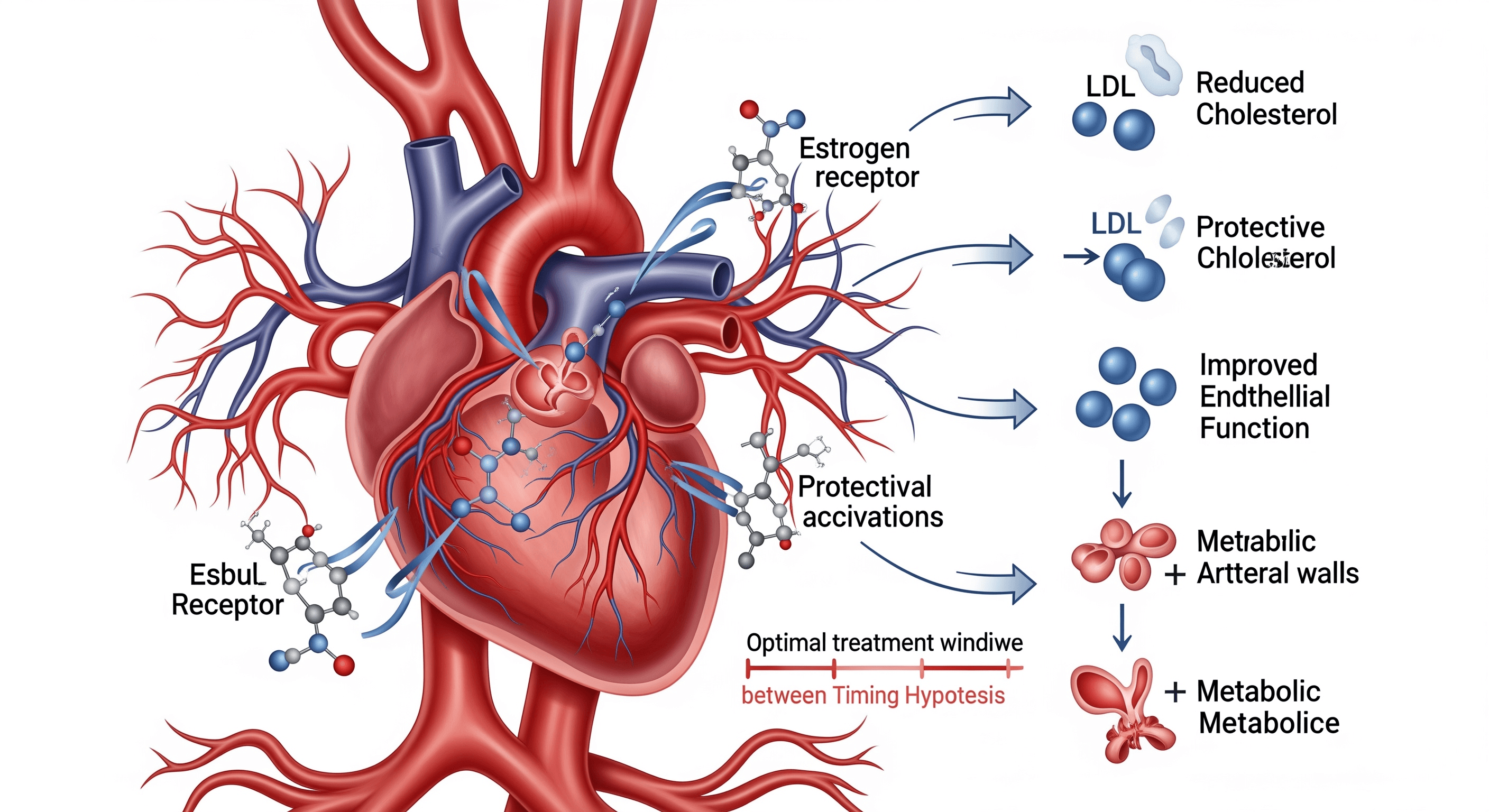
Hormone Replacement Therapy (HRT) has emerged as a significant tool in managing post-menopausal health risks. Despite historical controversies, particularly surrounding a flawed 2002 study, current research supports HRT’s protective effects on heart function, bone density, and overall health when appropriately prescribed.
However, HRT isn’t a one-size-fits-all solution. The therapy requires careful individualization based on personal health history, family medical history, and specific risk factors. This personalized approach to treatment represents an important frontier in post-menopausal health management.
The Research Gap in Women’s Health
A significant challenge in understanding and treating female reproductive aging has been the historical bias in medical research. For most of modern medical history, research has predominantly focused on male subjects, leading to significant gaps in our understanding of female biology.
Historical Research Bias
The extent of this research bias is stark: women weren’t required to be included in clinical trials until 1981, and animal studies weren’t mandated to include females until 2016. This male-centric approach has had serious consequences for women’s health care.
One telling statistic reveals that approximately 80% of drugs pulled from the market due to safety concerns were withdrawn because of adverse effects specifically in women. This highlights the critical importance of including female subjects in all stages of medical research.
The Challenge of Female Biology in Research
One reason often cited for excluding females from research studies is the inherent variability introduced by hormonal cycles. However, this “noise” in the data actually represents important biological information that shouldn’t be ignored.
The complexity of female biology, while making research more challenging, is precisely why it needs more attention and study. Understanding these variations is crucial for developing effective treatments and interventions.
The Future of Female Reproductive Longevity
As longevity research advances and human lifespans potentially increase, the question of reproductive aging becomes increasingly important. Without advances in understanding and treating reproductive aging, women might face spending half or more of their lives in a post-menopausal state.
Research Priorities
Several key areas require focused research attention:
- Understanding the mechanisms behind accelerated ovarian aging
- Developing more personalized approaches to hormone replacement therapy
- Investigating the role of neuropeptides in reproductive aging
- Studying the connection between reproductive aging and overall longevity
Practical Implications for Health and Longevity
While research continues, several evidence-based approaches can help support reproductive health and overall longevity:
- Regular physical activity, particularly weight-bearing exercises to maintain bone density and muscle mass
- Attention to sleep quality and quantity
- Balanced nutrition with attention to individual food sensitivities
- Regular health monitoring and preventive care
The Role of Individualized Medicine
The future of reproductive health management lies in personalized approaches that take into account individual variations in biology, genetics, and lifestyle factors. This individualized approach is particularly important in managing the transition through menopause and beyond.
Conclusion
Understanding and addressing female reproductive aging represents one of the most significant challenges and opportunities in modern medicine. As we continue to extend human lifespans, ensuring that women can maintain health and vitality throughout their lives becomes increasingly crucial.
The complexity of female reproductive biology, while presenting research challenges, also offers numerous potential intervention points for improving health outcomes. Continued research, particularly with a focus on female-specific biology, will be essential for developing effective treatments and interventions.